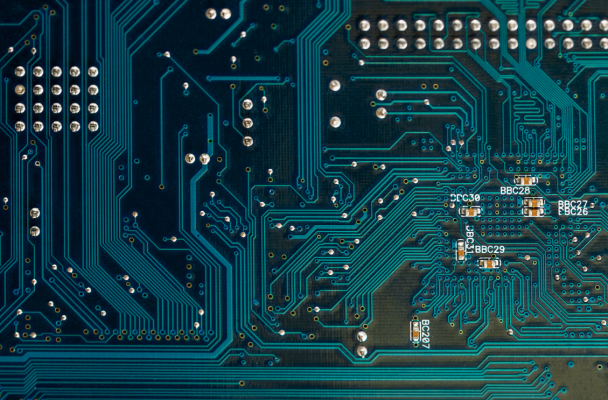
AI Servers Need 30, 40, and 50-Layer PCBs
Higher bandwidth, greater power density, and increasingly complex AI processors are pushing printed circuit boards to unprecedented layer counts. AI servers require high-layer-count PCBs because GPUs, AI accelerators, high-speed memory, networking interfaces, and power-delivery systems must exchange enormous amounts of data and power within a limited space. Additional PCB layers provide the routing space, dedicated power […]
Read More
PCBs for Electric Vehicles: Revolutionizing Automotive Tech
The electric vehicle revolution is triggering a complete reimagining of automotive electronics. At the center of this transformation lies an unsung hero: the printed circuit board (PCB). Modern EVs contain three times more PCBs than their internal combustion counterparts – 150+ boards in some models versus just 50 in traditional cars. This explosion isn’t simply […]
Read More
How PCBs Are Embedded in Today’s Military Hardware
Modern military power depends less on raw firepower and more on computational superiority. At the heart of this shift lies an unassuming but critical component: the printed circuit board (PCB). These intricate networks of copper and substrate form the central nervous system of every advanced weapons system, communications device, and surveillance platform deployed by modern […]
Read More
Compare Single-Layer and Multi-Layer PCBs: A Strategic Comparison
Every electronics engineer faces a fundamental choice early in the design process: single-layer or multi-layer PCBs? This decision isn’t just about stacking conductive layers; it shapes cost, performance, manufacturability, and even the lifespan of the final product. The debate between single-layer and multi-layer PCBs mirrors a broader engineering truth: simplicity and complexity each have their […]
Read More